
Outsourcing for Transportation Industry

Outsourcing in the Transportation & Shipping Industry
In the transportation and shipping industry, operational efficiency and customer responsiveness are critical. Oworkers supports logistics providers, freight companies and carriers with specialized outsourcing services including multilingual customer support, shipment tracking assistance, data processing and back-office operations.
By combining trained industry agents with AI-powered tools, Oworkers helps companies reduce costs, manage peak volumes and deliver a reliable customer experience across global markets.
insurance Industry Use Cases
01
Multilingual Customer Services for a Global Airline

Client Background and Challenges Faced
Inconsistent Global Service
The airline had been using a decentralized model with multiple small, in-country vendors, which resulted in a fragmented customer experience.
Service quality, response times, and agent knowledge varied dramatically from one region to another, with customer satisfaction (CSAT) scores showing a 40% variance between the best and worst-performing regions.
Limited Language Capabilities
Inability to Scale for Disruptions
High Operational Costs
Implementation Strategy
Oworkers.com was engaged to centralize and transform the airline’s global customer
service. We implemented a comprehensive, multilingual, and scalable solution designed to create a consistently superior customer experience.
1. Centralized Global Hub Model
2. Expanded Multilingual Support
3. IROP 'Burst' Capacity Team
We established a dedicated, cross-trained ‘burst’ team that could be activated within 30 minutes to handle sudden surges in contact volume.
This flexible staffing model allowed the airline to scale its support capacity by 500% during disruptions, ensuring that customer inquiries were handled promptly.
4. Omnichannel Service Platform
Results Achieved
The partnership with oworkers.com yielded significant and measurable improvements across all key performance indicators.
- Improved Customer Satisfaction: The airline’s global CSAT score increased from an average of 68% to 92% within 12 months. The gap between the highest and lowest performing regions was reduced to just 5%, demonstrating a new level of service consistency.
- Enhanced Operational Efficiency: Average handling time (AHT) was reduced by 15% while first-contact resolution (FCR) rates improved by 30%. During IROP events, wait times were kept under 10 minutes, and the call abandonment rate dropped to less than 5%.
- Significant Cost Savings: The centralized model and operational efficiencies delivered by oworkers.com resulted in a 35% reduction in the airline’s overall customer service costs, saving the company approximately $15 million annually.
- Increased Ancillary Revenue: With agents better trained in the airline’s products, ancillary revenue generated through the contact center (e.g., seat upgrades, extra baggage) increased by 22% in the first year.
02
AI Integration for Tier 1 Tracking Answers for a Courier Company

Client Background and Challenges Faced
A top-5 global courier company, handling over 25 million packages daily, had been struggling with the overwhelming volume of routine customer inquiries.
The single most common query, ” Where is my package? ” (WISMO), accounted for nearly 70% of all incoming contacts to their customer service centers.
Overwhelmed Human Agents
The company had been employing thousands of customer service agents whose primary function was to look up tracking information and relay it to the customer.
This was a repetitive, low-value task that led to high agent burnout and turnover rates (over 40% annually). It also meant that agents were not available for more complex, value-adding interactions.
High Service Costs
Inconsistent Customer Experience
Inability to Provide 24/7 Instant Support
Implementation Strategy
1. AI-Powered Chatbot and Voicebot Deployment
2. Seamless Human Handoff
3. Agent Role Transformation
4. Continuous AI Learning Loop
Results Achieved
- Automation of Tier 1 Inquiries: Within six months, the AI system was successfully handling 85% of all incoming WISMO inquiries without any human intervention. This represented a deflection of over 15 million contacts per month from human agents.
- Drastic Cost Reduction: The automation of high-volume, simple inquiries resulted in a 60% reduction in the cost-per-contact, leading to annual savings of over $30 million for the courier company.
- Instantaneous Customer Support: Customers received instant, 24/7 responses to their tracking questions, reducing the average time-to-answer for a WISMO query from several minutes to less than two seconds. Customer satisfaction for tracking inquiries increased by 45%.
- Elevated Agent Value and Satisfaction: Agent turnover decreased by 50% as their roles became more engaging and less repetitive.
Freed from mundane tasks, the human agents were able to resolve complex issues 40% faster and were repurposed to provide proactive outreach to customers with at-risk shipments, improving the delivery success rate by 5%.
03
Data Processing for Tariffs for a Container Shipping Company
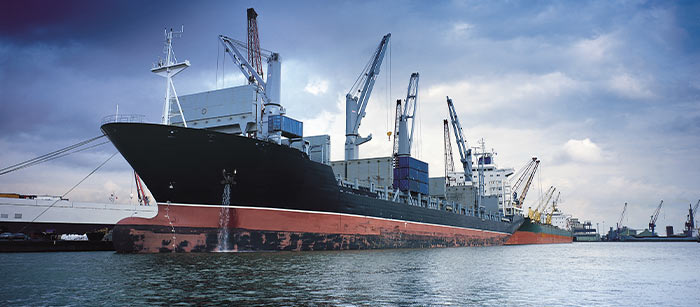
Client
A global container shipping line, managing a fleet of over 300 vessels and operating in more than 100 countries, had been facing extreme difficulty in managing its complex web of shipping tariffs.
The accuracy and timeliness of this data were critical for quoting customers, billing, and maintaining profitability, but their manual processes were failing under the weight of the complexity.
Massive and Dynamic Data Sets
Manual and Error-Prone Processes
Revenue Leakage and Disputed Invoices
The delays and errors in tariff updates were causing significant revenue leakage. It was estimated that the company was losing over $20 million annually due to under-billing.
Furthermore, incorrect freight invoices led to a high rate of customer disputes, delaying payments and damaging client relationships.
Lack of Competitive Agility
Implementation Strategy
1. Centralized Tariff Management Platform
We developed a cloud-based platform to act as a single source of truth for all tariff data. This platform was designed to automate the ingestion of data from multiple sources, including public tariff boards, competitor monitoring services, and internal pricing decisions.
2. Automated Data Processing with Human Oversight
3.Real-Time System Integration
4. Quality Assurance and Audit Trail
Results Achieved
The new, streamlined process for tariff management had a profound impact on the company’s financial performance and operational efficiency.
- Drastic Improvement in Speed and Accuracy: The time required to update a tariff across the global system was reduced from 72 hours to less than 15 minutes. The data accuracy rate improved from 92% to 99.9%, virtually eliminating errors in quoting and billing.
- Elimination of Revenue Leakage: With accurate, real-time tariff data, the company eliminated the estimated $20 million in annual revenue leakage. The rate of disputed invoices fell by over 90%, significantly improving cash flow.
- Increased Profitability and Market Agility: The ability to make instant, accurate pricing adjustments allowed the shipping line to optimize its yield management.
They were able to increase their profit margin by an average of 2% per TEU (twenty-foot equivalent unit). The company could also now react to competitor price changes within hours instead of days. - Significant Operational Cost Savings: The automation and specialized processing team provided by oworkers.com resulted in a 50% reduction in the internal cost of tariff management, even while handling a greater volume of data with higher accuracy.
The Global Engine of Commerce
The transportation and shipping industry is the lifeblood of the global economy, a vast and complex network responsible for moving goods and people across the world. The scale of this sector is immense, with the global logistics outsourcing market alone valued at over USD 1.1 trillion in 2024 and projected to exceed USD 2.1 trillion by 2035.
This dynamic industry, encompassing airlines, courier services, and maritime shipping, is currently navigating a period of unprecedented change, driven by technological innovation, shifting consumer expectations, and significant geopolitical and economic pressures. In this high-stakes environment, Business Process Outsourcing (BPO) has become an indispensable strategic tool.
It enables companies to enhance efficiency, manage costs, and improve customer satisfaction while navigating a landscape of increasing complexity. This presentation will explore the critical challenges facing the transportation and shipping industry and demonstrate how strategic outsourcing partnerships with providers like oworkers.com can deliver transformative solutions.

Key Challenges Facing the transportation Industry
Airlines

- Volatile Profitability
The industry is notoriously fragile, subject to economic uncertainty, geopolitical tensions, and fluctuating fuel costs. - Operational Strain
Record passenger demand (up 10.4% in 2024) and high load factors (83.5%) are straining capacity and service quality. - Workforce and Supply Chain Issues
Aircraft delivery delays, aging fleets, and workforce shortages across critical functions create significant operational hurdles
Courier & Express Delivery

- Intense Competition
The e-commerce boom has led to a highly competitive market with increasing pressure on delivery speed and cost. - Last-Mile Complexity
Managing the final leg of delivery efficiently and cost-effectively remains a major challenge. - Customer Expectations
Customers now demand real-time tracking, precise delivery windows, and seamless, proactive communication.
Container Shipping

- Cost and Rate Volatility
Freight rates have seen remarkable volatility due to geopolitical events like the Red Sea disruptions, container shortages, and shifting trade lanes. - Documentation and Compliance
Managing complex customs documentation, tariffs, and cross-border regulations is a significant administrative burden. - Lack of Visibility
Shippers often face a lack of real-time visibility into their cargo’s location
and status, leading to uncertainty and inefficiency.
The Strategic Benefits of Outsourcing

Cost Optimization & Scalability
- Reduce high operational overhead associated with customer service, back-office, and data processing.
- Convert fixed labor costs
into variable costs that scale with demand. - Mitigate capital expenditure
on non-core technology and infrastructure.
Enhanced Customer Experience
- Provide 24/7 multilingual customer support
to a global customer base. - Leverage AI-powered tools
for instant, accurate responses to common inquiries like shipment tracking. - Improve first-contact
resolution and overall customer satisfaction.


Operational Efficiency
- Streamline complex processes
like customs tariff processing and freight auditing. - Leverage specialized expertise and technology
to reduce manual errors and processing times. - Improve data accuracy
for better decisionmaking and planning.
Focus on Core Competencies
- Free up internal resources to focus on core activities
such as network optimization, fleet management, and strategic growth. - Reduce the managerial burden
of non-core operational departments.


Scalability & Flexibility
- Quickly scale support operations
to handle peak seasons, service disruptions, or market expansion without long-term commitments. - Access a global talent pool
to meet specific language or skill requirements.
oworkers
Your Partner for Transformation

oworkers.com provides a comprehensive suite of BPO services designed to meet the unique demands of the transportation and shipping industry.
We combine specialized expertise, advanced technology, and a commitment to quality to deliver solutions that
drive real business results.
Our key service offerings include:
- Multilingual Customer Services: Expert support for airlines, shipping lines, and
couriers, ensuring a superior experience for your global customers. - AI-Powered Support Solutions: Integration of AI and automation to handle highvolume inquiries, such as Tier 1 tracking support, freeing up human agents for more complex issues.
- Complex Data Processing: Specialized teams for processing intricate data sets,
including customs tariffs, freight invoices, and market rate analysis.
By partnering with oworkers.com, you can transform your operational challenges into competitive advantages, ensuring your business is agile, efficient, and customer-focused in the fast-moving world of transportation and shipping.
Oworkers : Your Strategic Partner inTransportation Outsourcing
oworkers.com is a leader in providing specialized BPO services to the Transportation & Shipping industry.
We understand the unique challenges and opportunities of the sector and deliver tailored solutions that drive measurable results.
